Why Choose Multi-Grip Fasteners for Global Sourcing?

Time:2026-10-21 Author:Mason
0%

Global sourcing teams are under pressure to reduce assembly time, inventory complexity, and supply disruption. Multi-Grip Fasteners address these demands by accommodating different material thicknesses with one fastener design. A single rivet can often cover several grip ranges, reducing the need for multiple part numbers. That matters when a purchasing team manages suppliers across several countries.

Grand View Research’s Industrial Fasteners Market Size, Share & Trends Analysis identifies automotive, aerospace, construction, and general manufacturing as major demand sectors. These industries increasingly value lightweight designs, repeatable installation, and reliable supply. Deloitte’s 2024 Global Chief Procurement Officer Survey also highlights resilience, supplier visibility, and cost control as continuing procurement priorities. Multi-Grip Fasteners support these priorities when their certified performance matches the application.

The practical benefit is easy to picture. A technician reaches for one approved rivet instead of searching through three bins. A distributor holds fewer variations. A sourcing manager simplifies forecasting and replenishment. Less confusion.

However, this advantage is not automatic. Grip range, shear strength, tensile strength, corrosion resistance, mandrel retention, and installation-tool compatibility must be verified. ISO and applicable ASTM or IFI requirements should guide qualification. Supplier claims deserve technical review, not blind trust.

In my experience, the strongest sourcing programs compare drawings, test reports, batch traceability, packaging controls, and replacement availability before approving a fastener. Multi-Grip Fasteners can improve global purchasing, but only when engineering validation and supplier discipline work together. The product is simple. The decision is not.
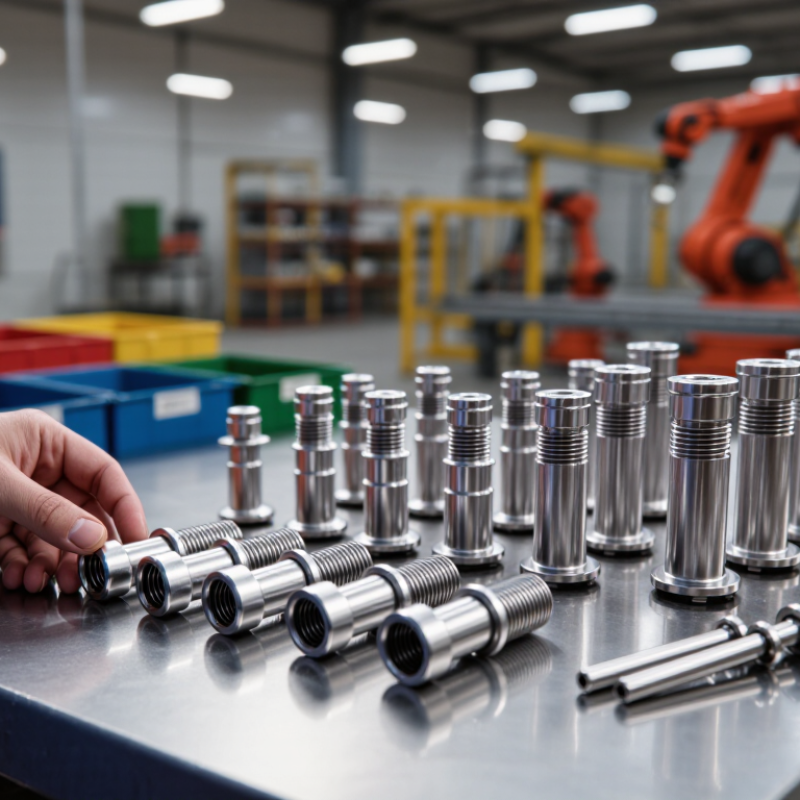
Why Choose Multi-Grip Fasteners for Global Sourcing?

What Are Multi-Grip Fasteners?

What Are Multi-Grip Fasteners?

Multi-grip fasteners are mechanical joining components designed to secure materials with different combined thicknesses. They are commonly produced as blind rivets, allowing installation from one accessible side. A mandrel pulls the rivet body into shape, expanding it behind the panels. This creates a firm mechanical lock.

The key feature is the grip range. One fastener may join sheets measuring 3 to 6 millimeters together. That flexibility can reduce inventory and simplify global sourcing. However, the stated range must match the real material stack. Paint, washers, coatings, and small gaps can change the final thickness. Measure carefully.

Their performance depends on more than size. Buyers should verify body material, mandrel material, head diameter, hole size, and pull strength. Packaging should protect the fasteners from moisture and deformation during transport. A supplier should also provide consistent dimensional records and batch traceability.

Small details matter.

A convenient grip range does not fix poor hole quality or weak joint design. Excessive clearance may allow movement, while insufficient grip may leave the panels loose. Corrosion can also become a concern when dissimilar metals meet. For demanding assemblies, sample testing under realistic loads is wiser than relying only on a catalogue table. I would still review every specification twice; broad compatibility can sometimes create false confidence.

How Do Multi-Grip Fasteners Work?

Multi-grip fasteners join materials with different combined thicknesses. Their working principle is simple, but installation still requires care. During installation, a tool pulls the internal mandrel through the sleeve. The sleeve expands behind the rear sheet and forms a blind head. This action clamps the layers together from one accessible side. No backside access is required. That is the practical advantage.

A single fastener can cover a defined grip range, such as 1.5 to 6 millimeters. The exact range depends on its design and material. As the mandrel moves, the sleeve shortens and bulges in a controlled zone. The formed backside must contact the rear surface firmly. If the hole is oversized, clamping may weaken. If the stack exceeds the rated range, the joint may remain loose. Small details matter.

For global sourcing, engineers should verify hole diameter, sheet thickness, tensile strength, shear strength, and corrosion resistance. Installation trials are valuable because real materials rarely behave exactly like drawings. In practice, coated panels can distort when excessive pull force is used. That result is avoidable, but easy to miss. Tool nosepiece settings, alignment, and mandrel retention also affect consistency. Sample inspections should check head seating, backside formation, and visible gaps. Multi-grip does not mean universal. That assumption can fail. Reliable specifications and traceable test records support safer purchasing decisions across suppliers.

What Benefits Do They Offer in Global Sourcing?

Why Choose Multi-Grip Fasteners for Global Sourcing?

Multi-grip fasteners offer flexibility when material thickness varies across international production sites. A single fastener can often cover several grip ranges. This reduces the need for multiple stock-keeping units and simplifies purchasing. In supplier evaluations, this matters because fewer parts mean fewer labeling and counting errors. It also helps factories manage mixed assemblies without constant tool changes.

Their value extends beyond inventory control. Multi-grip designs can accommodate uneven panels, coated surfaces, and minor dimensional differences. That tolerance is useful when components come from different countries. Installation teams may complete assemblies faster, especially when access is limited. Consistent clamping can also reduce rattling, movement, and rework during inspection. Still, performance depends on correct sizing, material compatibility, and installation torque. A wider grip range does not excuse poor engineering.

Global buyers should request test data, dimensional drawings, corrosion information, and traceability records. Samples should be checked under real conditions, including vibration, temperature changes, and repeated loading. This step is easy to skip. It should not be. Multi-grip fasteners may cost more per piece than standard options, yet their total sourcing cost can be lower. Freight planning, replacement stock, and assembly labor should all enter the calculation. The result is not always obvious on the first quotation.

Why Choose Multi-Grip Fasteners for Global Sourcing?

Multi-grip fasteners can cover several joint-thickness ranges with fewer part numbers, helping simplify international procurement and inventory planning.

The chart presents a transparent planning example for a 0.5–8.0 mm joint-thickness range. An eight-band single-grip assortment is compared with a three-size multi-grip assortment, reducing planned part numbers by 62.5%. Actual coverage depends on fastener diameter, material, installation access, and supplier specifications.

Which Materials and Applications Suit Them Best?

Multi-grip fasteners suit assemblies with changing material thicknesses. Their expanded grip range can reduce part variety and simplify global sourcing. In practical assembly work, this matters when panels arrive from different suppliers. A single fastener may accommodate thin covers and thicker support sections. Less inventory can also reduce packaging, storage, and line-side handling.

Material selection requires more care. Aluminum fasteners work well with lightweight panels and moderate loads. Steel versions offer higher strength for machinery frames, transport equipment, and structural enclosures. Stainless steel is useful in humid, coastal, or washdown environments. Titanium may suit demanding weight-sensitive applications, but its cost needs strong justification. Avoid pairing dissimilar metals without checking galvanic corrosion risks. A protective coating may help, but it is not a complete solution.

These fasteners perform well in sheet-metal joining, HVAC housings, electrical cabinets, vehicle interiors, and modular equipment. They are less suitable for joints exposed to continuous vibration unless the design includes suitable locking features and testing. Hole quality remains critical. Oversized or poorly aligned holes can weaken the connection, despite the fastener’s wider grip range. I would not select them from a catalog alone. Joint thickness, shear loads, pull-out forces, installation access, and service conditions must be verified. That judgment can still be wrong without real assembly trials. Small pilot batches often reveal problems that drawings hide.

Why Choose Multi-Grip Fasteners for Global Sourcing? — Materials and Applications Guide
Fastener Material Typical Density Typical Tensile Strength of Material Corrosion Resistance Typical Service Temperature Best-Suited Applications Global Sourcing Advantages Key Selection Considerations
Aluminum Alloy Approximately 2.65–2.85 g/cm³ Approximately 200–350 MPa, depending on alloy and temper Good in normal atmospheric environments; may require coating or isolation when joined to dissimilar metals Commonly suitable for approximately −50°C to 120°C, depending on alloy, mandrel, and seal design Sheet-metal assemblies, HVAC equipment, vehicle bodies, signs, enclosures, and lightweight panels Low shipping weight, easy installation, and broad availability in standard blind-fastener formats Lower strength and wear resistance than steel; check galvanic compatibility with copper, carbon steel, and carbon-fiber components
Carbon Steel Approximately 7.80 g/cm³ Approximately 350–700 MPa, depending on grade and heat treatment Limited without plating, painting, or another protective finish Commonly suitable for approximately −40°C to 150°C, subject to finish and fastener design General industrial equipment, structural sheet-metal work, machinery guards, brackets, and indoor assemblies High availability, competitive cost, and good mechanical strength for standard industrial use Specify plating or coating requirements; avoid unprotected use in humid, marine, or chemically aggressive environments
Stainless Steel Approximately 7.70–8.10 g/cm³ Approximately 500–1,000 MPa, depending on stainless grade and condition Very good resistance to atmospheric moisture; performance varies by grade and environment Commonly suitable for approximately −60°C to 300°C, depending on grade and joint design Outdoor equipment, food-processing machinery, chemical-service components, marine-adjacent structures, and cleanable enclosures Longer service life in corrosive environments can reduce replacement and maintenance costs Higher material and installation cost; confirm compatibility with the mating material and specify the stainless grade required
Copper Alloy Approximately 8.30–8.90 g/cm³ Approximately 200–500 MPa, depending on alloy and temper Good atmospheric corrosion resistance and excellent electrical conductivity Commonly suitable for approximately −50°C to 200°C, depending on alloy and joint conditions Electrical panels, grounding-related assemblies, conductive sheet-metal components, and selected low-load equipment Useful where conductivity and corrosion resistance are more important than low weight Lower mechanical strength than many steel options; assess galvanic interaction with aluminum and steel parts
Aluminum Body with Stainless-Steel Mandrel Overall density depends on the body-to-mandrel ratio Strength depends on the aluminum body, mandrel size, and joint geometry Good general resistance, with improved mandrel strength compared with an all-aluminum construction Often suitable for approximately −50°C to 120°C, subject to the complete fastener design Lightweight panels, transportation interiors, appliance housings, and assemblies requiring a stronger setting mandrel Combines low installed weight with improved setting reliability and broad material compatibility Check galvanic isolation between the stainless mandrel and aluminum body, especially in wet or salty environments
Steel Body with Steel Mandrel Approximately 7.80 g/cm³ Approximately 500–900 MPa for the complete fastener system, depending on design and grade Moderate to low without a suitable protective finish Commonly suitable for approximately −40°C to 150°C, depending on coating and application Higher-load sheet-metal joints, machinery, steel cabinets, brackets, and indoor structural assemblies High joint strength and consistent performance for applications where weight is less critical Use corrosion-resistant finishes for outdoor service; confirm drill-hole quality and installation-tool capacity
Stainless-Steel Body with Stainless-Steel Mandrel Approximately 7.70–8.10 g/cm³ Approximately 600–1,000 MPa, depending on grade and fastener geometry Very good, particularly when the selected grade matches the operating environment Commonly suitable for approximately −60°C to 300°C, depending on grade and application design Marine-adjacent equipment, outdoor infrastructure, food-processing systems, chemical-service enclosures, and high-maintenance-cost assets Strong durability and reduced risk of premature corrosion-related replacement Higher purchase and installation cost; verify grade, hole size, grip range, and required pull-out or shear performance
Technical note: Multi-grip fasteners are selected primarily for their ability to accommodate a wider range of combined material thicknesses with one fastener size. The performance figures above are indicative material ranges, not guaranteed fastener ratings. Final selection should be based on the fastener manufacturer’s tested shear and tensile values, grip range, hole diameter, joint thickness, installation-tool capacity, temperature, corrosion exposure, and applicable standards.

How Can Buyers Evaluate Suppliers and Quality?

When buyers evaluate multi-grip fastener suppliers, price should not lead the decision. Fit, consistency, and traceability matter more. A reliable supplier should explain raw material grades, production controls, and inspection methods in clear language. Ask for current material certificates, dimensional reports, and coating specifications. Check whether each batch carries a traceable lot number.

Samples reveal useful details. Measure grip range with calibrated tools, not visual judgment. Inspect head seating, sleeve expansion, and mandrel retention. Tensile and shear tests should follow recognized industry standards. Request test conditions, sample quantities, and failure records. A polished report is not enough.

I have trusted paperwork too quickly. That mistake can hide weak process control. Supplier audits should examine storage, gauge calibration, operator training, and nonconforming product procedures. Review how the factory isolates rejected parts. Ask for corrective-action evidence, not promises. Small gaps matter.

A capable supplier also manages global documentation carefully. Confirm packaging labels, export records, inspection plans, and change-notification procedures. Communication speed matters during a quality dispute. Can the supplier answer technical questions without vague language? Can they repeat production results across several lots?

Do not test one sample and stop. Use a risk-based sampling plan. Include periodic independent verification for critical applications. Multi-grip fasteners can solve assembly variation, but only when grip performance remains stable. That stability must be demonstrated, recorded, and questioned when results look unusually perfect.

FAQS

What are the main benefits of multi-grip fasteners in global sourcing?

They cover several material thicknesses with one fastener. This can reduce stock-keeping units, labeling errors, storage needs, and tool changes.

How do multi-grip fasteners handle assembly variations?

They can accommodate uneven panels, coated surfaces, and small dimensional differences. This helps when parts arrive from different countries.

Can they reduce total sourcing costs?

Sometimes. Unit prices may be higher, but fewer parts can lower freight, inventory, replacement stock, and labor costs. The quotation alone may mislead.

Which materials are suitable for these fasteners?

Aluminum suits lightweight panels and moderate loads. Steel supports stronger frames. Stainless steel fits humid or washdown areas. Titanium requires clear cost justification.

What applications commonly use multi-grip fasteners?

They suit sheet-metal joints, HVAC housings, electrical cabinets, vehicle interiors, and modular equipment. They can work in tight access areas.

Are multi-grip fasteners suitable for continuous vibration?

Not automatically. The joint may need locking features and vibration testing. A wider grip range does not solve poor joint design.

What should buyers verify before choosing a fastener size?

Check joint thickness, hole quality, shear loads, pull-out forces, installation access, torque, and service conditions. Small pilot batches can expose hidden problems.

How should buyers evaluate supplier quality?

Request material certificates, dimensional reports, coating details, test conditions, and traceable lot numbers. Measure samples with calibrated tools.

What supplier records deserve special attention?

Review inspection plans, packaging labels, export documents, gauge calibration, operator training, and rejected-part controls. Ask for corrective-action evidence.

Is testing one sample enough?

No. Use risk-based sampling and periodic independent checks for critical assemblies. Results should remain consistent across multiple production lots. Perfect reports deserve questions.

Conclusion

Multi-Grip Fasteners are versatile mechanical fastening components designed to securely join materials with different thicknesses while accommodating variations in joint conditions. Their adaptable grip range allows one fastener to replace several standard sizes, simplifying installation and reducing the need for extensive inventory. During installation, the fastener expands or deforms within the joint, creating a firm connection that can help distribute load and compensate for uneven or variable gaps.

For global sourcing, Multi-Grip Fasteners can lower purchasing complexity, shipping volume, and assembly time while supporting consistent production across different locations. They are commonly suited to applications involving sheet metal, composite panels, plastics, and other lightweight materials in industries such as transportation, construction, electronics, and general manufacturing. Buyers should evaluate suppliers by reviewing material specifications, corrosion resistance, dimensional consistency, grip-range performance, production capacity, inspection procedures, and traceability. Reliable quality documentation, sample testing, and clear communication about technical requirements are also essential for selecting fasteners that perform consistently in real-world applications.


Mason

Mason

Mason is a seasoned marketing professional with a deep expertise in the company's offerings and a passion for driving brand awareness. With a strong background in digital marketing strategies, he has an innate ability to connect with diverse audiences and effectively communicate product benefits.......