Industrial Fasteners will face a demanding 2026, shaped by infrastructure renewal, electric vehicles, renewable energy, and industrial automation. These applications need more than ordinary bolts. They require predictable strength, corrosion resistance, traceable materials, and stable performance under vibration, heat, and repeated loading. A loose connection can stop a production line, damage equipment, or compromise structural safety. Small parts carry serious responsibility.
Market data supports this growing importance. Grand View Research estimates the global industrial fasteners market was worth approximately USD 88 billion in 2023 and projects continued expansion through 2030. Fortune Business Insights also identifies construction, automotive, aerospace, and machinery as major demand sectors. Meanwhile, the World Steel Association continues to report steel as a foundation of global manufacturing, although energy costs and decarbonization pressures are changing material decisions. These reports point toward stronger demand for high-strength steel fasteners, stainless steel products, precision components, and engineered fastening systems.
The best choice for 2026 will not be the cheapest product in a catalog. It will match the load, environment, assembly method, and applicable standard. ASTM, ISO, and SAE specifications remain useful reference points, but specification alone cannot replace installation experience or supplier verification. Forecasts are not promises. Report definitions also differ, which makes direct market comparisons imperfect. That limitation deserves attention. This guide examines the leading Industrial Fasteners for 2026, including hex bolts, structural fasteners, self-drilling screws, rivets, washers, and specialty corrosion-resistant designs. It focuses on practical performance, documented quality, lifecycle value, and the details engineers sometimes overlook.
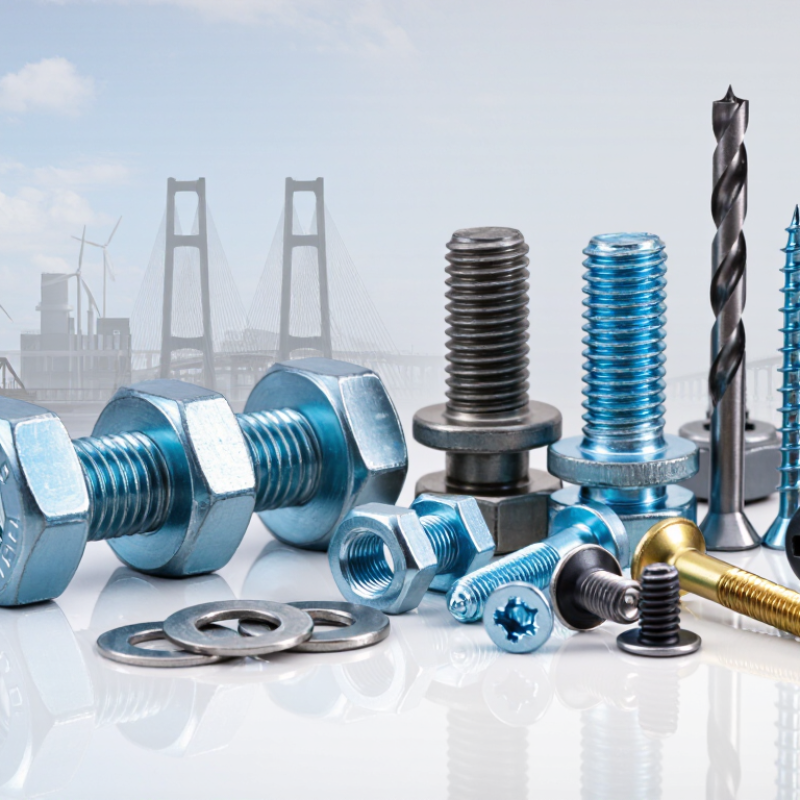
Industrial fasteners are mechanical components that join structural parts, machinery, and equipment. They include bolts, screws, nuts, washers, rivets, and threaded inserts. Their role seems simple. It is not. A loose joint can cause vibration, leakage, noise, or unexpected downtime. In maintenance work, thread damage and incorrect torque remain common problems. Material choice matters too. Steel suits many indoor assemblies, while stainless alloys help resist moisture and selected chemicals. However, corrosion performance depends on the entire joint, not one part.
For 2026, selection should begin with load, temperature, vibration, installation space, and service life. Engineers should check tensile strength, shear resistance, fatigue behavior, and thread compatibility. Coatings may improve corrosion resistance, but they can change friction and torque results. That detail is often missed. Use current technical standards, verified test reports, and traceable lot records. For automated lines, dimensional consistency and machine-readable identification may matter as much as price. Lower purchase cost can create higher maintenance costs. Still, the most advanced fastener is not always the right choice. Application data may be incomplete. Assumptions need challenging.
Tips: Create a joint specification before ordering. Record material, size, grade, coating, torque range, and operating environment. Test samples under realistic conditions. Inspect threads and seating surfaces. Do not rely on appearance alone. Recheck torque methods when coatings or tools change. Ask for certificates, then verify critical information independently. Small errors can remain invisible until vibration exposes them.
Industrial fasteners will remain essential across construction, machinery, transport, and energy systems in 2026. The MarketsandMarkets 2024 Fasteners Market report values the global market at about USD 95 billion in 2023. It projects steady growth through 2028. Demand is shifting toward stronger, corrosion-resistant, and traceable components.
Hex bolts and nuts suit structural frames, industrial equipment, and heavy vehicle assemblies. High-strength grades handle repeated loads when engineers control torque correctly. Threaded rods anchor pipe supports, suspended ceilings, and electrical trays. Self-drilling screws speed up sheet-metal installation, especially inside workshops. Blind rivets join thin panels where workers cannot reach both sides. Small parts, major consequences.
Washers spread pressure across painted or softer surfaces. They also reduce loosening risks in vibrating machinery, though they cannot replace proper joint design. ISO 898-1 specifies mechanical properties for carbon-steel bolts, screws, and studs. ISO 3506 covers corrosion-resistant stainless-steel fasteners. These standards support reliable purchasing and inspection decisions. Field checks often reveal mixed grades, damaged threads, or incorrect tightening. Stronger is not always safer. Material selection must match load, temperature, moisture, and maintenance access. According to the 2024 Global Fastener Market report from Research and Markets, automation and infrastructure investment are supporting long-term demand, but regional forecasts still contain uncertainty.
What Are the Top Industrial Fasteners for 2026?
Industrial fastener selection now depends on more than tensile strength. Material choice must match load, temperature, moisture, chemicals, and installation conditions. Carbon steel remains practical for protected indoor equipment and heavy structural joints. Stainless steel performs better around washdown areas, salt exposure, and corrosive process fluids. For high-temperature assemblies, heat-resistant alloys can retain strength when ordinary steel begins to soften. Small details matter.
Coatings add another layer of protection. Zinc-based coatings help control red rust in general industrial environments. Zinc-nickel coatings offer stronger corrosion resistance for demanding outdoor or humid applications. Ceramic and dry-film coatings can reduce friction, but their performance depends on surface preparation and curing. In wet environments, a coating alone may not prevent corrosion under the joint. Engineers should review coating thickness, salt-spray data, thread tolerance, and possible hydrogen embrittlement risks.
Performance requirements must guide the final choice. Torque values should reflect the coating’s friction coefficient, not a generic chart. Preload verification is important for vibrating machinery, where loose joints can damage housings and shafts. Temperature cycling also deserves attention because repeated expansion can reduce clamping force. In maintenance inspections, I often see suitable fasteners installed with unsuitable washers or tools. That shortcut matters. A reliable specification should include material grade, coating system, strength class, installation method, inspection frequency, and traceable test records. Yet even detailed specifications can miss field conditions, so engineers should revisit them after failures, corrosion findings, or process changes.
Minimum or typical ultimate tensile strength varies significantly by fastener material and grade. High-strength alloy steel classes are commonly selected for demanding structural and machinery applications, while stainless steel grades provide strong corrosion resistance. Aluminum and titanium fasteners offer lower density, with titanium providing a higher strength-to-weight ratio. Coatings such as zinc, zinc flake, and organic protective systems are used to improve corrosion resistance and should be selected alongside the required strength, temperature range, and service environment.
What Are the Top Industrial Fasteners for 2026?
Industrial fastener selection is moving beyond strength ratings. High-strength structural bolts, corrosion-resistant stainless fasteners, and vibration-resistant locking systems remain strong choices. ISO 898-1 defines mechanical properties for carbon steel bolts, while ISO 3506-1 covers stainless steel fasteners. For structural work, ASTM F3125 and EN 14399 provide clearer performance controls. Engineers should check preload, coating thickness, thread engagement, and washer seating. Small installation errors can cause large failures.
Manufacturing is becoming more controlled and less wasteful. The World Steel Association reported global crude steel production of about 1.84 billion tonnes in 2024. That scale increases pressure to reduce scrap, energy use, and inconsistent heat treatment. Cold heading, automated optical inspection, and controlled-atmosphere processing are becoming more important. Traceability matters. Each batch should connect to material certificates, furnace records, and inspection results. Not always.
Smart fasteners will develop through embedded load sensors, wireless condition monitoring, and digital maintenance records. A 2024 global smart manufacturing survey found that 86% of manufacturers viewed smart production as essential for future competitiveness. However, a sensor does not guarantee accurate data. Temperature, preload loss, damaged threads, and poor calibration can distort readings. Practical trials should compare sensor outputs with torque-angle testing and ultrasonic measurements. The technology is promising, but the industry still needs common data formats, simpler installation, and stronger field evidence.
What Are the Top Industrial Fasteners for 2026?
Choosing industrial fasteners in 2026 requires more than comparing price or tensile strength. MarketsandMarkets estimates that the global fasteners market could reach about USD 117.8 billion by 2028, driven by construction, machinery, and transport demand. This growth increases the need for traceable, correctly specified components.
Match the fastener to the joint environment. Use high-strength bolts for structural loads, stainless steel for corrosive areas, and coated steel when cost and protection must be balanced. Check thread size, grade, temperature, vibration, and galvanic compatibility. ISO 898-1 defines mechanical requirements for carbon and alloy steel bolts. ASTM F3125 also supports structural bolt selection. Do not trust appearance alone.
Installation quality often decides service life. Clean mating surfaces, align holes, and use calibrated torque tools. Follow the specified torque sequence, especially on flanges and rotating equipment. Torque alone can mislead because lubrication changes preload. Tension-controlled methods may provide better consistency in critical joints.
Maintenance should include visual checks, torque verification, corrosion inspection, and thread damage review. The U.S. Department of Energy recommends planned maintenance for industrial equipment because early defect detection reduces unplanned downtime. Still, torque rechecking is not always harmless; repeated tightening can damage threads or distort the joint. This point deserves more attention.
In practice, records are essential. Note batch numbers, installation torque, lubricant type, inspection dates, and abnormal movement. A small mistake can remain invisible for months. Reassess the specification when loads, coatings, or operating temperatures change. Even experienced teams occasionally select the right fastener for the wrong joint.
| Fastener Type | Common Materials | Typical Industrial Uses | Main Advantages | Key Limitations | Selection and Installation Guidance | Maintenance Focus |
|---|---|---|---|---|---|---|
| Hex-Head Bolts and Nuts | Carbon steel, alloy steel, stainless steel | Structural frames, machinery, equipment bases, maintenance assemblies | High load capacity; removable; available in standardized dimensions | May loosen under vibration; corrosion risk depends on material and coating | Match bolt grade, nut grade, diameter, thread pitch, and joint design. Tighten with a calibrated torque wrench or a verified tensioning method. | Check torque, corrosion, thread damage, and joint movement during scheduled inspections. |
| Socket-Head Cap Screws | Alloy steel, stainless steel | Compact machinery, tooling, automation equipment, enclosed assemblies | High strength for a small head size; suitable where access is limited | Hex recess can strip if the driver is damaged, undersized, or misaligned | Use the correct hex key or bit, keep the tool fully engaged, and avoid impact tools unless approved by the design specification. | Inspect recesses for rounding, verify preload, and replace fasteners with damaged heads or threads. |
| Structural High-Strength Bolts | High-strength carbon or alloy steel with protective coatings | Steel structures, bridges, towers, heavy industrial supports | Designed for high tensile and shear loads; suitable for engineered structural joints | Requires qualified installation, compatible assemblies, and controlled tightening procedures | Use only the specified bolt, nut, and washer assembly. Follow the applicable structural standard and the approved tightening method. | Inspect for slip, corrosion, cracking, missing components, and evidence of inadequate or excessive tightening. |
| Thread-Forming Screws | Hardened carbon steel, stainless steel, coated steel | Sheet metal, electrical enclosures, thin-wall components, plastics | Can reduce the need for pre-tapped holes; efficient for repetitive assembly | Repeated removal may reduce holding strength; excessive torque can crack thin materials | Select the screw geometry for the substrate and control driving speed and torque to prevent stripping or material damage. | Check pull-out, thread wear, panel distortion, and loss of clamping force. |
| Self-Drilling Screws | Hardened steel, stainless steel, corrosion-resistant coated steel | Metal cladding, ductwork, light-gauge steel assemblies, roofing systems | Drills and fastens in one operation; reduces assembly steps | Limited suitability for thick or very hard materials; coating damage can accelerate corrosion | Choose the drill-point length and thread design for the combined material thickness. Keep the driver aligned and avoid overdriving washers. | Inspect washer seals, coating damage, loose joints, and corrosion around penetrations. |
| Blind Rivets | Aluminum, steel, stainless steel | Enclosures, panels, ventilation systems, automotive and appliance assemblies | Installed from one side; fast and useful where rear access is unavailable | Generally not intended for frequent disassembly; grip range must be correct | Select rivet diameter, material, head style, and grip range based on the total clamped thickness. Use the correct nosepiece and mandrel setting. | Look for loose heads, spinning rivets, cracks, hole enlargement, and galvanic corrosion between dissimilar metals. |
| Weld Nuts and Captive Nuts | Low-carbon steel, stainless steel | Frames, cabinets, automotive components, repeated service panels | Provides a permanent internal thread and simplifies one-person assembly | Welding can distort thin parts or affect corrosion protection; damaged nuts may be difficult to replace | Confirm weld quality, thread alignment, access, and heat-treatment requirements before production. | Check weld integrity, thread cleanliness, alignment, and evidence of loosening or heat-related damage. |
| Studs and Threaded Rod | Carbon steel, alloy steel, stainless steel | Flanges, pipe supports, equipment anchoring, suspended services | Allows nuts on one or both ends; useful for deep or through-access joints | Exposed threads are vulnerable to damage and corrosion; alignment is important | Verify engagement length, projection, thread condition, and compatibility with nuts and washers. Avoid bending during installation. | Inspect exposed threads, nut seating, joint alignment, vibration, and corrosion at supports or flanges. |
| Anchors for Concrete and Masonry | Zinc-plated steel, stainless steel, galvanized steel, bonded anchor systems | Equipment bases, guardrails, cable trays, industrial platforms | Transfers loads into concrete or masonry when designed and installed correctly | Capacity depends strongly on substrate strength, edge distance, embedment, spacing, and installation quality | Use an anchor type approved for the substrate and loading condition. Clean drilled holes and follow the specified hole diameter, embedment, and torque. | Check for cracking, edge damage, corrosion, nut movement, and changes in the supported equipment. |
Industrial fasteners join structural parts, machinery, and equipment. Common types include bolts, screws, nuts, washers, rivets, and threaded inserts. Small parts can create major consequences.
A loose joint may cause vibration, leakage, noise, or unexpected downtime. Thread damage and incorrect torque remain common maintenance problems. The failure may appear months later.
Hex bolts and nuts suit structural frames and heavy equipment. Threaded rods support pipes, ceilings, and electrical trays. Self-drilling screws speed sheet-metal installation. Blind rivets join thin panels when rear access is unavailable.
Start with load, temperature, vibration, installation space, and service life. Check tensile strength, shear resistance, fatigue behavior, and thread compatibility. The strongest option is not always the safest choice. Application data may be incomplete.
Steel suits many indoor assemblies. Stainless alloys help resist moisture and selected chemicals. Coated steel may balance protection and cost. Corrosion performance depends on the complete joint, not one component.
Clean mating surfaces and align the holes. Use calibrated torque tools and follow the specified tightening sequence. Lubrication can change preload. Torque alone may mislead. Tension control may improve consistency in critical joints.
Inspect threads, seating surfaces, corrosion, and abnormal movement. Verify torque when conditions require it. Repeated tightening can damage threads or distort the joint. This deserves more attention. Do not inspect appearance alone.
Record material, size, grade, coating, torque range, lubricant, batch number, and inspection date. Request certificates and independently verify critical information. Traceable records help explain failures. They do not replace practical testing.
Do not select fasteners by price or tensile strength alone. Do not mix grades or ignore galvanic compatibility. Recheck specifications after changing loads, coatings, tools, or temperatures. Even experienced teams can choose the right fastener for the wrong joint.
Industrial Fasteners are essential mechanical components used to join, secure, and support parts in industries such as construction, manufacturing, transportation, energy, and infrastructure. In 2026, selecting the right fastener requires more than matching size and thread type; engineers must consider load capacity, vibration, temperature, corrosion exposure, installation conditions, service life, and sustainability. Common options include bolts, screws, nuts, washers, rivets, anchors, and specialized threaded components, each suited to specific structural, mechanical, or assembly applications.
Material and coating selection will remain central to performance, with steel, stainless steel, aluminum, and advanced alloys offering different strengths and environmental resistance. Industry standards, precision manufacturing, automation, and quality inspection will support safer and more consistent production. Emerging smart fasteners may also provide condition monitoring and maintenance data. To achieve reliable results, users should verify specifications, apply correct tightening methods, inspect joints regularly, and replace damaged or worn components through a planned maintenance program.

AIPLLE METAL