Choosing reliable suppliers matters when aluminium and steel components must perform under pressure. This guide introduces China’s top 10 Aluminium Steel Blind Rivets suppliers, based on practical purchasing factors rather than reputation alone. Product consistency, material traceability, factory capability, and communication all deserve close attention. A polished catalogue is not enough.
Aluminium Steel Blind Rivets combine a lightweight aluminium body with a steel mandrel. This structure can support efficient fastening in sheet metal, enclosures, furniture, automotive parts, and general fabrication. Buyers should examine rivet diameter, grip range, head style, mandrel strength, and surface finish. Samples can reveal problems that specifications hide. Check them.
A dependable supplier should provide clear drawings, batch records, inspection details, and realistic delivery information. Relevant quality systems may support confidence, but certificates should be verified against the actual factory and product scope. Independent testing can confirm pull-out strength, shear resistance, corrosion behaviour, and dimensional accuracy. These checks are especially useful for repeated production orders.
The selection process is not perfectly simple. A low quotation may reflect efficient manufacturing, or it may signal thinner material and weaker inspection. My own purchasing experience suggests that response speed often predicts future cooperation, although it is not conclusive. Ask how suppliers handle rejected samples, tooling changes, and urgent revisions. Their answers matter.
This introduction does not present a permanent ranking. Supplier capabilities change, and regional market information can become outdated. Instead, it offers a practical starting point for comparing Chinese manufacturers with greater confidence, clearer evidence, and fewer costly surprises. Performance comes first.
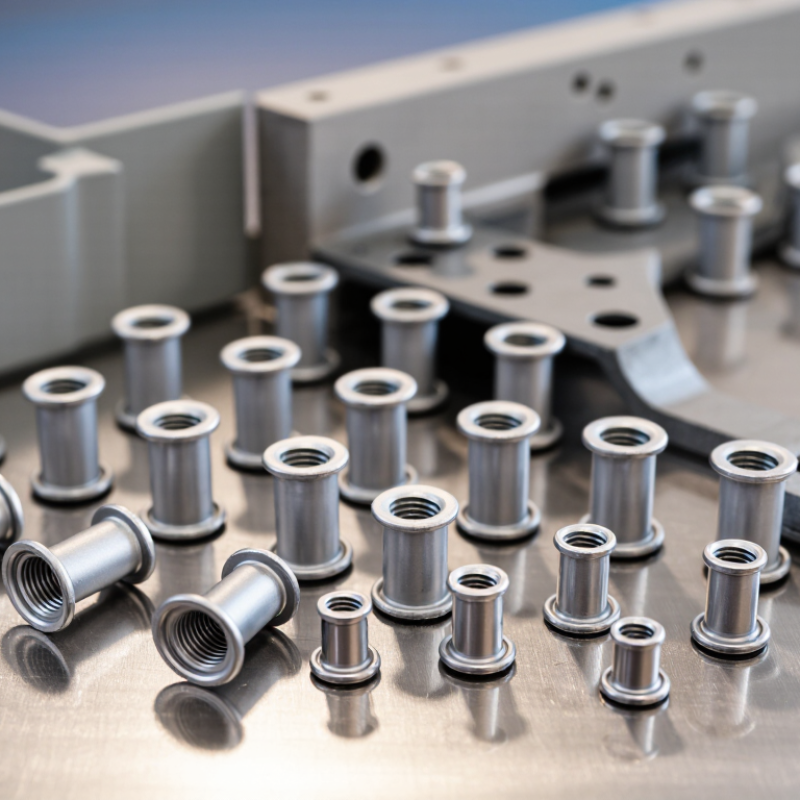
Aluminium steel blind rivets combine a lightweight aluminium body with a steel mandrel. They install from one side, making them useful when the rear surface is unreachable. A rivet gun pulls the mandrel, expanding the body inside the joint. The result is a compact mechanical fastening point.
They commonly join thin sheet metal in electrical enclosures, HVAC panels, vehicle bodies, trailers, and household appliances. Field technicians value their quick installation and clean appearance. The U.S. Department of Energy reports that reducing vehicle weight by 10% can improve fuel economy by approximately 6–8%. This helps explain interest in lighter fastening systems.
However, they are not universal. The International Aluminium Institute identifies transport and construction as major aluminium-consuming sectors, supporting demand for lightweight components. Yet steel and aluminium can create galvanic corrosion when moisture and salt are present. Protective coatings, compatible washers, and correct hole sizing matter. Poorly matched rivets may loosen under vibration. That detail is often overlooked.
Rivet selection should consider grip range, shear load, tensile load, and panel thickness. Open-type rivets suit many general assemblies, while sealed designs may better resist water and dust. ISO 15973 provides dimensional guidance for several open blind rivets. Still, real joints need testing. Laboratory data cannot fully represent road vibration, thermal cycling, or careless installation.
They combine a lightweight aluminium body with a steel mandrel. A rivet gun pulls the mandrel and expands the body inside the joint. Installation happens from one side.
They join thin sheet metal in electrical enclosures, HVAC panels, vehicle bodies, trailers, and appliances. They suit areas with limited rear access. The finished joint looks neat.
Aluminium reduces fastening weight. Lower vehicle weight may improve fuel economy. However, weight savings alone do not prove better performance.
Open rivets suit many general assemblies. Sealed designs may offer better resistance to water and dust. Choose based on exposure, not appearance.
Moisture and salt may cause galvanic corrosion between different metals. Protective coatings and compatible washers can reduce the risk. Poor hole sizing can still create trouble.
Check grip range, shear load, tensile load, and panel thickness. Confirm the hole diameter and installation tool. A rivet that works on thin panels may fail under vibration.
Request samples before placing a large order. Measure body diameter, head diameter, grip range, and mandrel break force. Review material records, batch numbers, and inspection reports.
Ask for reports linked to the exact sample. Confirm production photos, packaging details, and batch traceability. Recent third-party testing is useful, but it is not perfect.
No. A low price may hide thinner material, inconsistent mandrels, or poor sorting. An expensive quotation is not automatically safer. Compare samples, records, delivery time, and replacement procedures together.
Not really. Test samples on the actual sheet thickness and under realistic loads. Road vibration, temperature changes, and careless installation can expose weaknesses. I would revise my judgment after the first shipment.
This guide explains what Aluminium Steel Blind Rivets are, how their aluminium body and steel mandrel provide a practical balance of strength, light weight, corrosion resistance, and efficient installation, and where they are commonly used in construction, transportation, machinery, appliances, and general fabrication. It also outlines the main factors for evaluating suppliers in China, including product consistency, raw material control, dimensional accuracy, production processes, quality inspection, delivery reliability, and technical support.
The article presents a structured approach to comparing ten leading supplier profiles without relying on brand promotion. It highlights how to review certifications, testing procedures, manufacturing capacity, customization options, packaging, minimum order quantities, and export experience. Finally, it explains how buyers can match a supplier’s rivet sizes, grip ranges, surface finishes, performance requirements, production volume, budget, and after-sales service with the specific needs of their projects, helping them make a practical and well-informed sourcing decision.

 AIPLLE METAL