Choosing the right Trifold Blind Rivets requires more than comparing prices or counting pieces per box. Global buyers must connect rivet design with material thickness, joint access, load expectations, and installation conditions. A rivet that performs well on a dry indoor panel may fail sooner in coastal air or outdoor equipment. Small details matter. The body material, mandrel strength, head diameter, and grip range all influence joint security.
Experienced purchasing teams usually begin with a clear application record. Measure the combined thickness of the materials, then select a suitable grip range with reasonable allowance. Check whether the rivet contacts aluminum, steel, painted surfaces, or plastic. These combinations can affect corrosion risk and panel damage. Confirm the required hole diameter, installation tool compatibility, and visible head finish. Supplier documentation should include dimensional data, material specifications, production tolerances, and inspection records. Independent testing can add confidence when the application carries vibration or repeated handling.
Specifications alone are not enough. Ask for samples.
A practical trial should imitate real installation conditions. Record tool pressure, leg formation, pull-through resistance, and surface marking. Photographs can help compare results across suppliers. No selection guide is perfect, and a laboratory result may not represent every jobsite. That limitation deserves attention. Reliable suppliers should explain testing methods honestly, identify batch controls, and support traceability. They should also discuss packaging, moisture protection, delivery consistency, and technical support for different markets. With careful verification, buyers can choose Trifold Blind Rivets that balance performance, installation efficiency, durability, and responsible global sourcing.
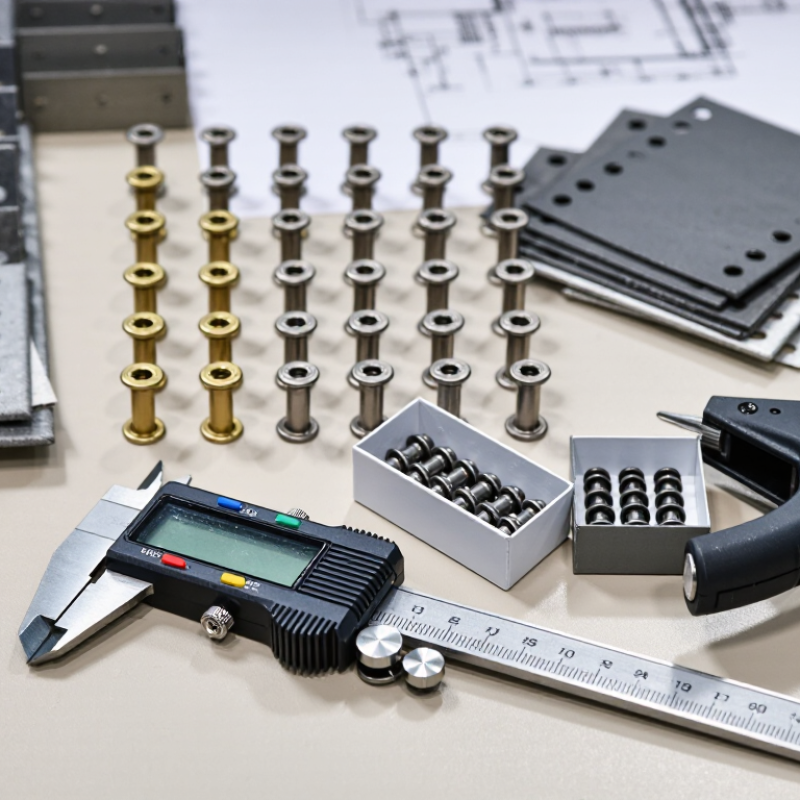
How to Choose the Right Trifold Blind Rivets for Global Buyers?
A trifold blind rivet uses a hollow sleeve and a mandrel. During setting, the mandrel pulls the sleeve into three outward-folding legs. These legs spread behind the panel and create a broad bearing area. The geometry matters because each leg must fold without cracking, twisting, or leaving excessive gaps.
Select the rivet by checking grip range, hole diameter, head shape, and material compatibility. A short rivet may not form stable legs. An oversized rivet can buckle before reaching the rear surface. Thin sheet panels often benefit from the wider load distribution of trifold expansion. Soft materials may still require a washer or a different head design. Check the actual drawings.
The three legs do not always expand evenly. Misaligned holes, burrs, coating thickness, and uneven clamping can change the final shape. A controlled installation tool improves repeatability, but it cannot fix the wrong grip length. Inspect sample joints from both sides, especially where vibration or moisture is expected. Confirm mechanical test data, dimensional tolerances, and applicable regional requirements before purchasing in volume. Real assemblies are less tidy. One trial fit may look convincing, yet fail after repeated loading.
| Nominal Rivet Diameter | Typical Rivet Body Lengths | Approximate Hole Diameter | Typical Grip Range | Trifold Geometry and Expansion | Best-Fit Joint Conditions | Selection and Inspection Points |
|---|---|---|---|---|---|---|
| 3.2 mm (1/8 in) |
6–16 mm | 3.3–3.4 mm | 0.5–6.0 mm | The hollow rivet body is divided by three longitudinal forming zones. During setting, the mandrel pulls the body inward and forms three broad legs on the blind side. | Thin sheet metal, plastic panels, light interior assemblies, and joints where the rear surface is inaccessible. | Confirm that the selected grip range covers the total clamped thickness. Avoid an oversized hole, which can reduce clamp-up and allow movement. |
| 4.0 mm (5/32 in) |
8–20 mm | 4.1–4.2 mm | 1.0–8.0 mm | The three legs spread radially and create a large rear-side bearing area. Compared with a standard blind rivet, the load is distributed over a wider area of soft or brittle material. | Plastics, fiberglass panels, thin aluminum sheet, composite covers, and applications requiring improved pull-through resistance. | Check the panel material and washer requirement. A backing washer may be useful when the blind-side material is very soft or flexible. |
| 4.8 mm (3/16 in) |
10–25 mm | 4.9–5.0 mm | 1.0–12.0 mm | The three expanded legs form a broad, umbrella-like blind-side footprint. Correct mandrel retention leaves the body firmly clamped between the head and the expanded legs. | General-purpose structural panels, vehicle interiors, enclosures, roof or wall panels, and mixed-material joints. | Select the mandrel and body material for the service environment. Verify tensile and shear requirements using the supplier's tested performance data. |
| 6.0 mm (1/4 in) |
12–30 mm | 6.1–6.2 mm | 2.0–16.0 mm | The larger body produces three substantial rear-side legs and a high-area load distribution pattern. The setting force and required tool capacity are also higher. | Thick or flexible panels, large access covers, heavy-duty enclosures, and joints where pull-through resistance is important. | Confirm that the installation tool supports the rivet diameter and mandrel size. Check clearance behind the workpiece for full three-leg formation. |
| Large-Flange Head | Available across several diameters | Depends on the body diameter | Depends on the selected body length | The enlarged front flange spreads clamping pressure over a wider area while the three rear legs distribute load on the blind side. | Thin sheet, soft plastics, composites, painted panels, and materials vulnerable to head pull-through or surface indentation. | Use when the standard head diameter is too small for the front material. Confirm flange diameter, head height, and visible-surface clearance. |
| Countersunk Head | Available in selected sizes | Requires a prepared countersink | Depends on the selected body length | The three-leg blind-side expansion remains the same, but the front head is designed to sit flush or nearly flush with a properly prepared countersunk surface. | Flush exterior panels, covers, aerodynamic surfaces, and assemblies where a protruding rivet head is unacceptable. | Countersinking must match the head angle and depth. An incorrect countersink can weaken the front sheet or prevent proper seating. |
| Aluminum Body | Common in lightweight sizes | Use the recommended hole tolerance | Depends on body length | The relatively soft body forms the three legs with lower setting force and is suitable where low mass and corrosion compatibility are priorities. | Lightweight panels, non-structural enclosures, interior trim, and aluminum-to-aluminum assemblies. | Avoid using aluminum blindly in high-load, high-temperature, or galvanically incompatible environments. Check material pairing and corrosion protection. |
| Steel or Stainless-Steel Body | Common in higher-strength sizes | Use the recommended hole tolerance | Depends on body length | The three-leg configuration provides a wide bearing footprint while the stronger body material supports higher joint loads and more demanding service conditions. | Outdoor equipment, vibration-prone assemblies, heavier panels, and applications requiring increased strength or temperature resistance. | Match the body, mandrel, and parent materials to limit galvanic corrosion. Use a compatible setting tool and verify required pull and shear performance. |
| Correct Grip Selection | Body length is not the grip range | Hole must be clean and round | Total material thickness must fall within the stated range | If the grip is too short, the legs may not develop fully. If the grip is too long, excessive body material can create poor clamping, loose legs, or an improperly formed blind head. | Every blind-side installation where access is limited and the rear-side expansion cannot be visually checked during assembly. | Add the thickness of all clamped layers, coatings, washers, and gaps. Compare this total with the rivet's published grip range before ordering. |
| Three-Leg Expansion Check | Inspect after setting | No cracked or elongated hole | Even clamp-up across the joint | A properly set rivet shows three formed legs with stable contact against the blind-side material. Incomplete, uneven, or folded legs indicate a tooling, hole, grip, or material problem. | Quality control for international production, field repairs, and assemblies where the blind side is difficult to access. | Check head seating, mandrel retention, joint tightness, leg symmetry, surface damage, and any signs of rotation or pull-through. |
| Technical note: Dimensions and grip ranges shown above are representative selection ranges for common trifold blind-rivet configurations, not a universal standard. Exact values vary by rivet design, body material, head style, mandrel design, and applicable product standard. For production purchasing, confirm the final hole size, grip range, setting force, tensile strength, shear strength, corrosion resistance, and installation-tool compatibility against the specific technical datasheet. | ||||||
It uses a hollow sleeve and a mandrel. The mandrel pulls the sleeve into three outward-folding legs. These legs spread behind the panel. They create a broad bearing area.
Each leg should fold evenly without cracking or twisting. Large gaps can weaken the joint. Uneven legs may leave unstable contact behind the panel. The final shape is not always perfect.
Measure every joint layer, including paint, sealant, washers, and gaps. The measured thickness must fit inside the rivet’s grip range. Allow for compression and installation variation. A short rivet may form weak legs.
Too little grip can leave the legs underdeveloped. Excessive grip may create uneven clamping. An oversized rivet can buckle before reaching the rear surface. Small errors matter.
Compare the rivet body material and mandrel material. Aluminum may suit lighter panels. Steel joints may require higher strength and corrosion planning. Material assumptions can fail across regions.
Use applicable ISO 14589 test methods. Test tensile strength with axial loading. Test shear strength with controlled overlapping joints. Record peak load, dimensions, failure mode, and test conditions.
Development samples may not match production material. Request samples from the intended production lot. Use the actual coating, hole size, tool, and joint thickness. One impressive result proves little.
Inspect both sides of the joint. Look for rotation, loose folding, cracks, burrs, and uneven legs. Misaligned holes can change expansion. Tool control helps, but it cannot fix the wrong rivet length.
Request lot-specific certificates and complete installation test reports. Check dimensional tolerances, materials, grip range, and tested loads. Confirm traceable sample identification. ISO compliance alone does not guarantee every assembly will work.
Choosing the right Trifold Blind Rivets requires understanding how their unique three-leg expansion creates a broad bearing surface behind the panel. This design helps distribute clamping force and makes them suitable for applications involving thin, soft, or layered materials. Buyers should first match the rivet’s grip range to the total panel thickness, while considering ISO 15977 requirements for dimensions, materials, and performance. Correct selection also depends on the rivet diameter, head style, and prepared hole size, as these factors directly influence load distribution, installation quality, and joint stability.
Material choice should reflect both strength and weight requirements. Aluminum, steel, and stainless steel offer different density ranges, approximately 2.70–8.00 g/cm³, as well as varying corrosion resistance and mechanical performance. Before approval, the selected rivet should be evaluated for shear and tensile strength using ISO 14589 test methods. A careful comparison of geometry, grip capacity, material properties, and tested performance helps global buyers choose a reliable fastening solution for their specific panel assembly.

 AIPLLE METAL