Choosing Aluminium Blind Rivets in 2026 requires more than comparing prices or package counts. The right choice depends on material pairing, grip range, shear strength, corrosion exposure, and installation access. A rivet joining thin aluminum panels may fail when used on steel brackets under vibration. Small details matter. This guide introduces a practical selection process for engineers, fabricators, maintenance teams, and informed buyers. It considers alloy, mandrel design, head style, diameter, and verified performance data. Product labels can look similar, yet their working limits may differ significantly.
Reliable decisions begin with the joint, not the catalog photograph. Measure the combined material thickness, then match it against the stated grip range. Check hole diameter, access direction, expected loads, temperature, moisture, and galvanic contact. Manufacturer datasheets and independent test documentation deserve more trust than vague marketplace claims. Recognized specifications, including applicable ISO or ASTM references, can support consistent purchasing and quality checks. Field inspection also helps: look for head seating, panel movement, mandrel retention, and surface damage after installation. A hand tool may suit occasional repairs, while pneumatic equipment can improve repeatability on production lines. However, tool compatibility is often overlooked. That mistake is avoidable. No selection guide replaces a real trial assembly. Test a small batch first. Record what happened. This cautious step exposes assumptions, including those that seemed reasonable but proved incomplete. A careful choice protects the joint, the product, and the people relying on it.
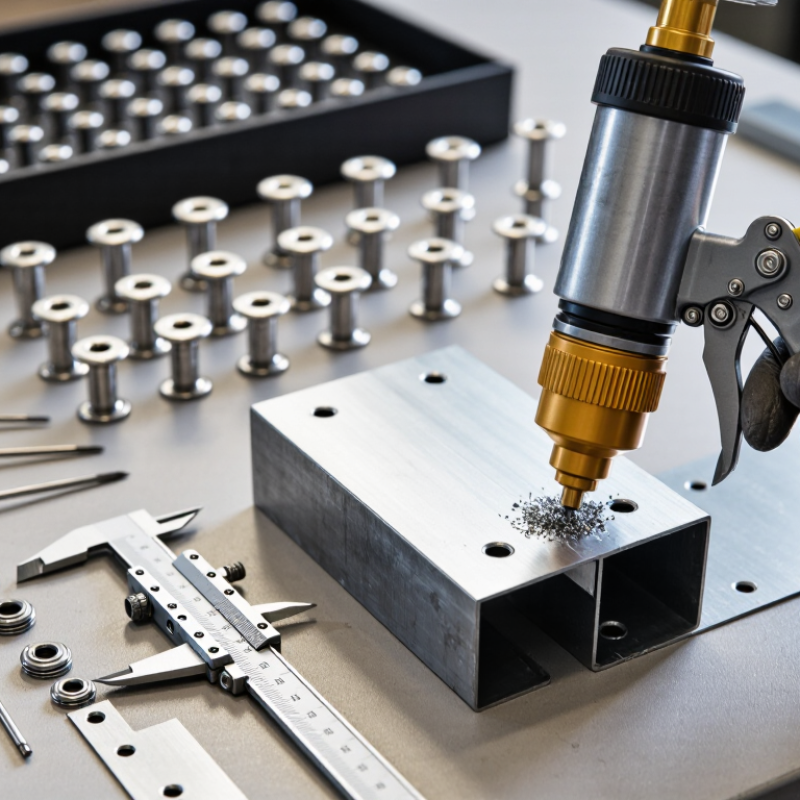
An aluminium blind rivet joins materials from one accessible side. It has a hollow rivet body and a central mandrel. A setting tool pulls the mandrel through the body. The tail then expands behind the sheets, creating a clamp. The mandrel head remains locked inside the rivet or breaks away. Simple, but not foolproof.
The International Aluminium Institute reported global primary aluminium production near 72 million tonnes in 2024. This scale supports stable material supply, yet alloy choice still matters. Aluminium rivets offer low weight and useful corrosion resistance. They suit panels, ductwork, light frames, and electrical enclosures. However, they may not match steel rivets under severe vibration or heavy shear loads. USGS Mineral Commodity Summaries 2025 also identifies aluminium as a major industrial material, not a universal fastener solution. My practical mistake was choosing by diameter alone. Grip range matters more than appearance.
Tips: Measure the total material thickness first. Match the rivet grip range to that measurement. Check the required hole diameter and avoid oversized holes. Review shear and tensile ratings from a technical datasheet. Consider galvanic corrosion when aluminium contacts steel or copper. A compatible coating or isolating washer may help. For outdoor work, test a sample assembly. Real humidity, movement, and installation pressure can expose weaknesses that catalog numbers miss.
How to Choose Aluminium Blind Rivets in 2026?
Which Aluminium Blind Rivet Types Suit Different Applications?
Standard open-end aluminium blind rivets suit general sheet-metal assembly. They work well for panels, brackets, ducts, and light enclosures. Choose them when the rear side is difficult to access. Their aluminium body offers low weight and useful corrosion resistance. However, they may not suit high-vibration joints or heavy structural loads.
Closed-end rivets create a sealed joint around the mandrel area. They are practical for outdoor housings, electrical enclosures, and applications needing improved moisture resistance. Large-flange rivets spread pressure across thin or soft materials. They reduce pull-through in plastics, insulation panels, and thin aluminium sheets. That detail matters.
Multigrip rivets can handle different material thicknesses. They are useful when panel dimensions vary during production. Countersunk rivets provide a flush surface for covers, signs, and sliding components. The prepared hole must match the rivet head angle. Poor preparation can leave sharp edges or weaken the joint.
I have found that grip range deserves more attention than appearance. Measure the combined material thickness before ordering. Check both shear and tensile requirements, not just diameter. Aluminium rivets paired with aluminium sheets can reduce galvanic corrosion concerns. Still, damp environments require careful coating and sealing choices. I once selected a rivet that was too short. The joint looked secure but loosened during testing. Small mistakes become visible under vibration. Test representative samples before regular installation, especially when temperature changes or repeated movement are expected.
Selecting an aluminium blind rivet starts with the joint, not the rivet box. Measure every material layer, including paint, washers, and flexible seals. This total thickness determines the required grip range. A rivet that is too short may not form correctly. One that is too long can leave a weak, uneven bulb.
Choose the rivet diameter according to the load and hole design. A 4.0 mm rivet often suits light sheet-metal work, while thicker structures may require a larger diameter. Check the manufacturer’s hole-size recommendation carefully. Even a small mismatch can cause looseness. I usually test one sample before production because drawings do not show every real-world variation. The sample sometimes reveals hidden compression or poor access.
Strength matters in two directions: shear and tensile resistance. Compare both ratings with the joint load, then include a sensible safety margin. Aluminium offers useful corrosion resistance and low weight, but it is not always the strongest choice for vibration or high-temperature assemblies. Consider the mandrel material and possible galvanic corrosion between dissimilar metals. Clean the hole, keep the surfaces aligned, and use the correct setting tool. I have occasionally selected a rivet by diameter alone, and that shortcut was a mistake. Recheck grip range after any coating, gasket, or material change. Small details matter.
How to Choose Aluminium Blind Rivets in 2026?
Material compatibility should guide your rivet choice before appearance or price. Aluminium rivets suit aluminium sheets, light panels, and many indoor assemblies. However, contact with steel, copper, or stainless steel can create galvanic corrosion. Moisture makes this reaction worse. I once saw clean-looking joints develop white corrosion after repeated condensation. The problem was not the rivet alone. The surrounding materials and drainage were ignored.
Environmental conditions also change the correct specification. Coastal projects need stronger corrosion protection and sealed joints. Industrial areas may expose fasteners to oils, cleaning agents, or chemical vapors. Outdoor structures face temperature changes, rain, and trapped water. Choose a rivet with a suitable alloy, head style, and grip range. Check the combined thickness carefully. A rivet that is too short may fail to form properly. A longer rivet can leave an unstable tail. Always verify shear and tensile requirements through reliable technical data. Small details matter.
Tips: Test a sample joint before production. Keep dissimilar metals separated when practical. Use washers where thin sheets may deform. Inspect installed rivets for loose stems, damaged heads, and water traps. Do not assume a common size fits every environment. That assumption is convenient, but often wrong.
| Application or Condition | Recommended Rivet Body | Typical Mandrel Choice | Compatibility Consideration | Environmental Exposure | Selection Guidance | Important Checks |
|---|---|---|---|---|---|---|
| Aluminium-to-aluminium assembly | 5052 or 5154 aluminium body | Aluminium mandrel for maximum galvanic compatibility; steel mandrel when higher setting strength is required | Very low galvanic potential when the rivet, sheets and coating system are compatible | Indoor use, dry service or controlled outdoor exposure | Use a dome head for general fastening and a large-flange head when the sheet is thin or soft | Confirm grip range, hole diameter, head clearance and required shear or tensile capacity |
| Aluminium joined to carbon steel | Aluminium body, preferably with a protective coating or electrically isolating interface | Plated or corrosion-resistant steel mandrel, selected with attention to coating integrity | Aluminium and steel can form a galvanic couple in the presence of moisture or an electrolyte | Outdoor, humid, marine or de-icing-salt environments | Use isolating washers, sealant, paint or conversion coating where practical; prevent standing water | Inspect coating damage, joint drainage, edge distance and long-term corrosion allowance |
| High-humidity or coastal service | Aluminium body with corrosion-protective finish, or a more corrosion-resistant fastener system when specified by the design authority | Corrosion-resistant steel mandrel; avoid relying on an unprotected carbon-steel mandrel | Salt deposits increase electrolyte conductivity and accelerate galvanic corrosion | Salt spray, marine atmosphere, frequent condensation and wind-driven rain | Prefer sealed or structurally sealed rivets where water ingress through the joint is unacceptable | Check salt-spray evidence, seal design, drainage and compatibility of sealants with aluminium |
| Thin sheet, plastic or composite panel | Aluminium body with large-flange head | Aluminium or corrosion-resistant steel mandrel, depending on load requirements | The softer or brittle panel may fail by pull-through before the rivet reaches its rated capacity | Indoor or protected outdoor service; temperature cycling may affect plastics and composites | Select a larger bearing area and use a controlled installation force to avoid crushing or cracking | Verify panel thickness, washer requirement, pull-through resistance and thermal expansion |
| High vibration or cyclic loading | Aluminium body sized for the required joint load; structural-grade design may be necessary | Steel mandrel generally provides greater setting and retained strength than an aluminium mandrel | Material strength alone does not prevent loosening or fatigue if the joint is poorly designed | Machinery, vehicle bodywork, HVAC equipment and transport applications | Consider sealed, lock-type or structural blind rivets when resistance to mandrel pull-out and vibration is required | Calculate joint shear, tensile, bearing and pull-out loads; confirm installation quality and hole fit |
| High-temperature service | Aluminium body only when the service temperature remains suitable for the alloy and joint design | Steel mandrel may retain strength better than aluminium, but the complete rivet assembly must be evaluated | Aluminium loses strength as temperature rises; differential thermal expansion can also change preload | Engine compartments, heat-producing equipment and repeated heating and cooling | Do not select by room-temperature strength alone; obtain temperature-rated performance data | Check maximum and continuous temperature, thermal cycling, sealant limits and fire requirements |
| Chemical exposure | Aluminium alloy and finish selected after chemical compatibility review | Mandrel material and coating must be compatible with the same chemicals and cleaning agents | Acids, strong alkalis, chlorides and dissimilar-metal contact can damage aluminium or its protective oxide film | Industrial cleaners, process chemicals, fertilizer, pool chemicals or exhaust condensate | Use chemical-resistance data for the exact concentration, temperature and exposure duration | Test the complete joint, including coating, sealant, washer and mandrel, rather than the body alone |
| Clean appearance or visible panel | Aluminium body with a matching finish; dome head for a low-profile visible joint | Select the mandrel finish to match corrosion and appearance requirements | A damaged coating or exposed mandrel can become the starting point for staining and corrosion | Architectural panels, signage, enclosures and consumer equipment | Use a controlled hole, correct nosepiece and perpendicular installation to prevent head damage | Confirm head diameter, head height, finish, colour tolerance and allowable surface marking |
Choosing aluminium blind rivets in 2026 starts with fit, not price. Confirm alloy, head style, diameter, and grip range against the joint drawing. A rivet that bottoms before clamping can look secure yet loosen under vibration. Request batch traceability and mechanical results tested to ISO 14589. That standard covers tensile and shear testing for blind rivets. European Aluminium reports that recycled aluminium can require up to 95% less energy than primary metal. Verify recycled-content claims through composition and coating records.
Installation quality depends on the hole. Use the specified drill size, remove burrs, and keep panels tightly aligned. Set the tool square to the surface. The mandrel should break cleanly, without crushing thin sheet or leaving a loose stem. Inspect the head, backside, and clamp marks on sample joints. Test several assemblies after temperature or vibration exposure. I have seen acceptable-looking joints fail because the grip range was guessed. That mistake deserves more attention.
Safety is part of rivet selection. Choose a tool whose pull force matches the rivet diameter and production rate. Use eye protection; broken mandrels can eject sharply. NIOSH recommends limiting occupational noise exposure to 85 dBA over eight hours. Measure the tool during real use, not only in a quiet workshop. Keep fingers clear, secure the workpiece, and collect discarded stems. A certificate helps, but installation records and operator training reveal more. Not every failure is a product failure.
They suit general sheet-metal assembly, including panels, brackets, ducts, and light enclosures. They work well when the rear side is inaccessible. Not for heavy loads. Avoid them in severe vibration unless testing supports the choice.
Closed-end rivets help seal the joint around the mandrel area. They suit outdoor housings and electrical enclosures. They offer improved moisture resistance. However, sealing still depends on proper installation and surrounding design.
Large-flange rivets spread clamping pressure over a wider area. They help prevent pull-through in plastics, insulation panels, and thin aluminium sheets. Use washers when thin material still bends during installation. That problem is easy to miss.
Multigrip rivets accommodate different combined material thicknesses. They help when panel dimensions vary during production. Measure the thickest and thinnest assemblies before ordering. A convenient range may still be unsuitable.
Countersunk rivets create a flush surface for covers, signs, and sliding components. The prepared hole must match the rivet head angle. Remove sharp edges after drilling. Poor preparation can weaken the joint.
Aluminium rivets generally suit aluminium sheets and light panels. Contact with steel, copper, or stainless steel may increase galvanic corrosion. Moisture makes this reaction worse. Use separation, suitable coatings, drainage, and sealing where practical.
Measure the combined material thickness before ordering. Check diameter, head style, alloy, and grip range. A short rivet may not form correctly. A long rivet may leave an unstable tail. I once chose one too short. It loosened during vibration testing.
Use the specified hole size and remove burrs before setting the rivet. Keep panels aligned and hold the tool square to the surface. Inspect the head, backside, clamp marks, and broken mandrel. Wear eye protection and keep fingers clear. Test sample joints after vibration and temperature changes. A certificate helps, but records reveal more.
Choosing the right Aluminium Blind Rivets in 2026 begins with understanding how they work: a tubular rivet is inserted through aligned materials, then the mandrel is pulled to expand the rivet body and create a secure joint from one accessible side. Their lightweight, corrosion-resistant properties make them useful for many assembly and repair tasks, but different designs may be needed for thin sheets, layered materials, vibration-prone joints, or applications requiring a smoother finish.
Selection should consider rivet type, diameter, length, grip range, shear and tensile strength, and the loads the joint will experience. Material compatibility is also important, especially when aluminum is joined to other metals or exposed to moisture, chemicals, temperature changes, or outdoor conditions. Before installation, check product consistency, hole size, tool suitability, and surface alignment. Following correct installation procedures and wearing appropriate eye and hand protection can help produce reliable, durable joints while reducing the risk of loosening, deformation, or installation-related injury.

AIPLLE METAL