China has become a major sourcing base for industrial fastening products, including Exploding Rivets used in controlled assembly applications. Global buyers often compare suppliers by product quality, production capacity, documentation, and export experience. Price matters, but it should not lead the decision.
This guide introduces ten Chinese suppliers serving international customers. It focuses on practical details that purchasing teams can verify, such as rivet materials, mandrel design, size tolerance, surface treatment, packaging, and sample availability. Some suppliers may specialize in aluminum rivets, while others offer steel, stainless steel, or customized solutions. Factory audits, inspection reports, and traceable batch records can provide stronger evidence than attractive catalog images.
Details matter.
Reliable suppliers should explain their testing methods clearly. They should also confirm production lead times, minimum order quantities, payment terms, and after-sales support. Buyers may request samples before approving large orders, especially when rivets must fit automated tools or specific panel thicknesses. Certifications can support evaluation, but certificates should be checked for scope, validity, and issuing organization.
This overview is designed for engineers, distributors, contractors, and procurement professionals. It does not claim that one supplier is suitable for every project. Manufacturing capabilities can change, and online information may become outdated. That limitation deserves attention. Buyers should independently verify specifications, compliance requirements, and commercial conditions before placing an order. With careful comparison, the selected supplier can offer a more dependable balance of performance, cost, and delivery reliability.
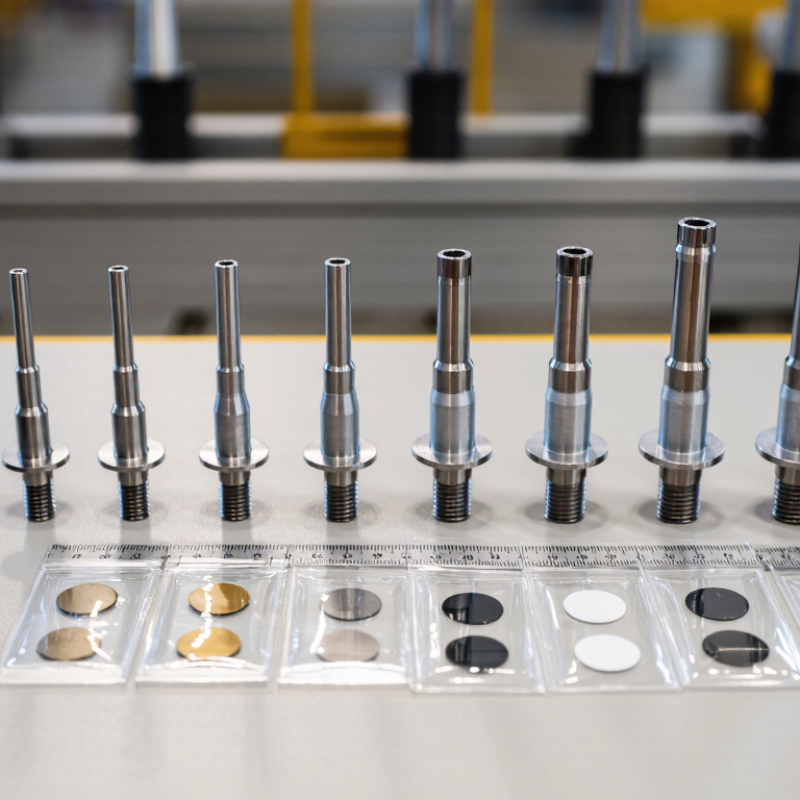
Exploding rivets are specialized blind fasteners designed for joints with access from one side. Their name sounds dramatic, but the process is controlled and highly engineered. A small internal charge expands the rivet body, forming a firm mechanical lock behind the panel. This action removes the need for a worker to reach the hidden side.
These rivets are used in aircraft structures, rail vehicles, marine panels, industrial cabinets, and difficult repair areas. They work well when conventional riveting tools cannot reach both surfaces. Typical applications include thin aluminum skins, composite panels, inspection covers, and enclosed frames. Engineers still check grip range, hole diameter, shear strength, and temperature resistance before approval. A rivet that fits visually may fail under vibration.
For global buyers, supplier evidence matters. Request material certificates, batch traceability, dimensional reports, and installation guidance. Controlled storage and trained handling are also essential. In practice, small differences in coating or expansion behavior can affect joint quality. The term “exploding rivet” may confuse inexperienced purchasing teams. Some products are unsuitable for ordinary workshop use. A careful specification review is necessary, and not every low-cost option deserves trust.
| No. | Non-Branded Supplier Profile | Typical China Sourcing Region | Exploding Rivet Type | Common Materials | Typical Size Range | Head and Body Options | Recommended Applications | Relevant Technical References | Key Buyer Verification Points |
|---|---|---|---|---|---|---|---|---|---|
| 1 | Profile A: General-Purpose Split-Body Producer | Zhejiang | Open-end exploding rivets with expanding legs | Aluminum Steel Stainless steel | Body diameters commonly from 3.2 to 6.4 mm; grip lengths selected according to panel thickness | Dome head, large-flange head, plain or serrated body | Plastic panels, thin sheet metal, signs, light enclosures and general maintenance work | Blind-rivet dimensional practice; ISO 15973 series may be used where the product design is applicable | Confirm leg expansion diameter, minimum grip, mandrel retention and pull-out performance |
| 2 | Profile B: Plastic and Composite Panel Specialist | Jiangsu | Large-expansion exploding rivets for soft or brittle substrates | Aluminum body Polyamide components Steel mandrel | Common body diameters of 4.0 to 6.0 mm with extended grip options | Large flange, low-profile head and broad rear expansion | ABS panels, fiberglass-reinforced plastic, honeycomb boards and interior trim | Material compatibility testing; product drawings should specify expansion geometry and load limits | Check substrate cracking, washer requirements, temperature range and visible-head diameter |
| 3 | Profile C: Stainless Steel Corrosion-Resistance Producer | Guangdong | Stainless steel split-body blind rivets | 304 stainless steel 316 stainless steel | Usually available in approximately 3.2 to 6.4 mm diameters; custom lengths may be available | Dome head or countersunk head; passivated or polished surface | Outdoor equipment, marine-adjacent assemblies, kitchen equipment and humid environments | Stainless-steel grade identification, salt-spray testing and corrosion-control procedures | Verify actual alloy certificates, galvanic compatibility, setting force and surface treatment |
| 4 | Profile D: Automotive Interior Fastener Supplier | Shanghai and nearby industrial areas | Low-profile exploding rivets for trim and interior panels | Aluminum Zinc-plated steel Stainless steel | Common diameters from 3.2 to 5.0 mm with short and medium grip ranges | Low-profile dome head, painted head and controlled expansion legs | Door trims, dashboards, luggage compartments, seat components and vehicle body panels | IATF-oriented quality systems may be requested; dimensional control should follow approved drawings | Review vibration resistance, head pull-through, noise prevention and batch traceability |
| 5 | Profile E: Hardware and Construction Fastener Producer | Hebei | Heavy-duty exploding rivets with reinforced expansion | Carbon steel Zinc-plated steel Aluminum | Typical diameters from 4.0 to 6.4 mm; longer grip lengths for multilayer assemblies | Large flange, dome head and weather-resistant coated surfaces | Roofing accessories, insulation boards, sheet-metal covers and light construction panels | ISO 14589 testing principles may be used for blind-rivet tensile and shear verification where suitable | Confirm coating thickness, salt-spray results, shear strength and installation-tool compatibility |
| 6 | Profile F: Electrical Enclosure Fastener Supplier | Shandong | Short-grip exploding rivets for cabinets and equipment housings | Aluminum Zinc-plated steel Stainless steel | Frequently supplied in 3.2, 4.0 and 4.8 mm diameters with short grip ranges | Small dome head, countersunk head and concealed-rear expansion | Electrical cabinets, control panels, HVAC housings and instrument enclosures | RoHS and REACH declarations may be requested for regulated electrical and industrial markets | Check electrical isolation needs, burr control, head seating and enclosure panel thickness |
| 7 | Profile G: Marine and Outdoor Hardware Producer | Fujian | Wide-flange exploding rivets for outdoor panel fastening | 316 stainless steel 5052 aluminum Marine-grade coatings | Common diameters from 4.0 to 6.4 mm; medium and long grip configurations | Large flange or sealed-head design where water entry must be reduced | Outdoor signs, recreational equipment, coastal enclosures and light marine fittings | Salt-spray exposure, dimensional inspection and material certification | Verify sealing performance, galvanic corrosion control and compatibility with coated panels |
| 8 | Profile H: Custom-Head and Special-Geometry Producer | Anhui | Made-to-drawing exploding rivets with customized head or leg geometry | Aluminum alloys Carbon steel Stainless steel | Typical production covers 3.2 to 6.4 mm; non-standard dimensions require drawing approval | Oversized head, countersunk head, colored head or application-specific expansion legs | Special machinery, branded equipment housings without visible brand data and prototype assemblies | Approved engineering drawings, first-article inspection and control-plan documentation | Request samples, sectioned-rivet analysis, dimensional reports and production-capability evidence |
| 9 | Profile I: High-Volume Standard Rivet Producer | Jiangxi | Standard open-end exploding rivets for recurring industrial orders | Aluminum Steel Stainless steel | High-volume standard sizes generally include 3.2, 4.0, 4.8, 5.0 and 6.4 mm diameters | Dome head and large-flange head with standard mandrel configurations | Furniture hardware, appliances, general fabrication, packaging equipment and maintenance | Lot-based dimensional inspection, tensile testing and incoming-material verification | Evaluate repeatability, packaging method, carton labeling, lot traceability and delivery capacity |
| 10 | Profile J: Export-Oriented Mixed-Material Supplier | Hubei | Mixed-material exploding rivets supplied for international assembly programs | Aluminum body Steel mandrel Stainless steel | Common catalog range of approximately 3.2 to 6.4 mm, with multiple grip lengths | Open-end dome head, large flange and painted or plated finishes | Export machinery, cabinets, transport equipment, consumer hardware and panel assemblies | ISO 9001 quality documentation, RoHS/REACH declarations and export packing controls may be requested | Confirm test methods, packaging standards, documentation language, customs classification and sample approval |
Exploding rivets are specialized blind fasteners for joints accessible from one side. A controlled internal charge expands the rivet body and creates a rear mechanical lock. The name sounds dramatic. The process is engineered and controlled.
They appear in aircraft structures, rail vehicles, marine panels, and industrial cabinets. They also suit thin aluminum skins, composite panels, inspection covers, and enclosed frames. Access is the key issue.
Conventional tools often require access to both sides of a joint. These rivets work when the hidden surface cannot be reached. That saves awkward repositioning. But it does not remove inspection needs.
Check grip range, hole diameter, shear strength, and temperature resistance. Review the material grade, coating, dimensional tolerance, and approved application. A visually matching rivet may still fail during vibration.
Request material certificates, batch traceability, dimensional reports, and installation guidance. Current test reports should support strength, corrosion, vibration, and temperature claims. Independent verification is useful for first orders.
Review manufacturing experience, inspection equipment, factory records, and export history. Ask for samples matching the approved drawings and specifications. A factory visit may reveal incomplete records behind attractive photographs.
Packaging should protect parts from moisture, impact, and identification errors. Suppliers should provide clear documents, production schedules, and responsive engineering support. Slow replies can become shipment delays.
No. Small coating or expansion differences can change joint performance. Some factories customize well but lack export experience. Others manage logistics but offer fewer material choices. No evaluation is perfect. Incoming batches still need testing.
This guide introduces Exploding Rivets, also known as break-stem blind rivets, explaining their structure, installation process, and common applications in construction, transportation, machinery, electronics, and general manufacturing. It outlines how the top Chinese suppliers are evaluated through product consistency, material options, production capacity, quality-control systems, customization services, export experience, and customer support. The selection approach focuses on practical information that helps international buyers identify dependable manufacturing partners.
The supplier profiles compare product ranges, technical capabilities, packaging options, export markets, certifications, lead times, and order flexibility without promoting any specific brand. The guide also explains how buyers can assess rivet dimensions, strength, corrosion resistance, testing procedures, documentation, and delivery reliability. Finally, it presents key steps for choosing a suitable Chinese supplier, including confirming technical specifications, requesting samples, reviewing inspection records, clarifying trade terms, and establishing clear communication before placing a larger order.

 AIPLLE METAL